
How Sculptural Fiber Redefines Modern Interiors
In modern design, a wall is more than a boundary — it is an opportunity for depth. While art is often viewed as a two-dimensional finishing touch, sculptural fiber art introduces a physical presence that interacts with the very architecture of a home. Here is why textured, large-scale textiles are becoming the essential focal point for curated spaces.
1. Art You Can Experience
Sculptural fiber art is defined by its refusal to be "flat." When we integrate natural cotton into hand-finished walnut or oak frames, we are creating a three-dimensional object.
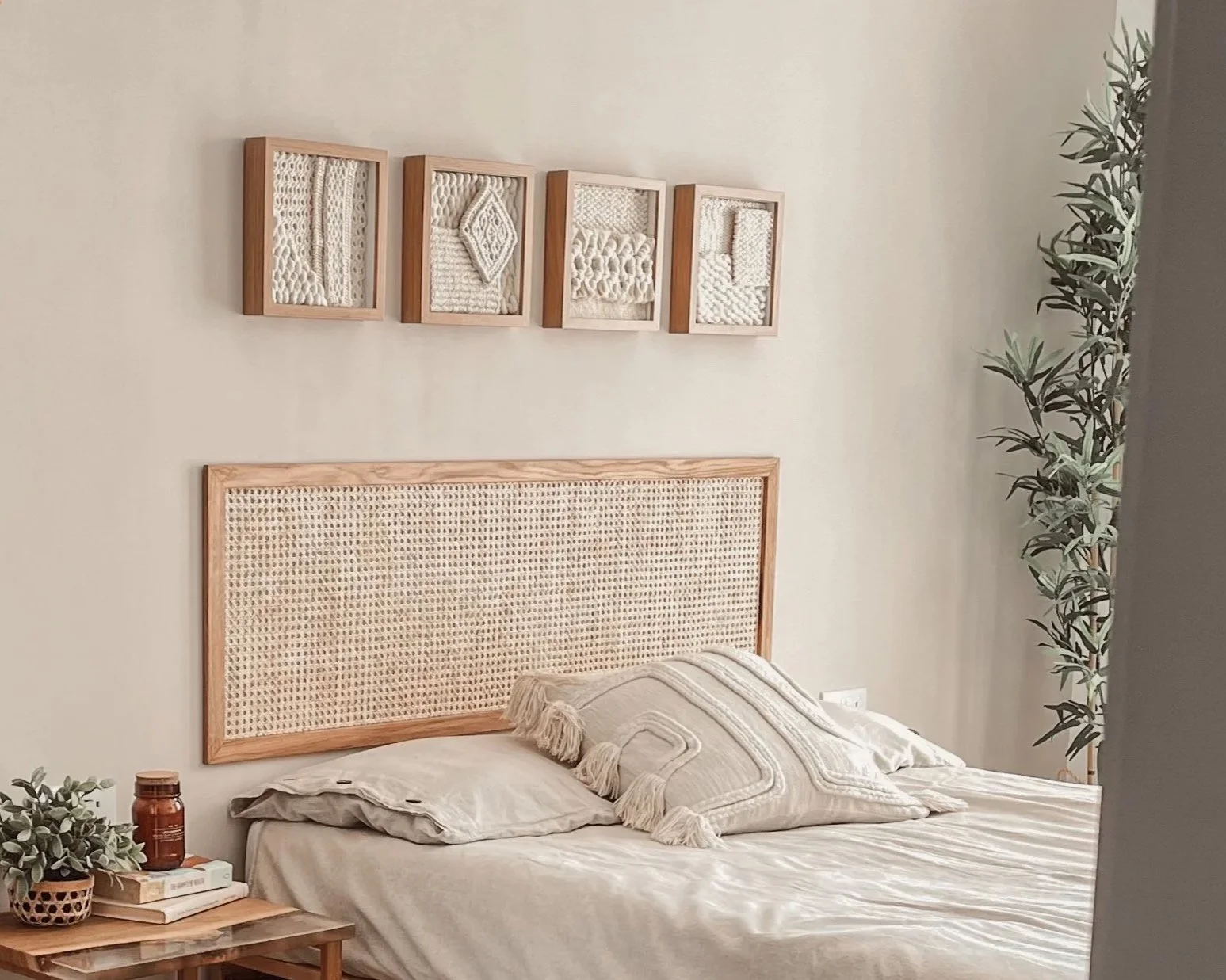
Unlike art that sits behind glass, fiber art is exposed and tactile. It invites the eye to travel through the layers of the weave and the grain of the wood. This openness creates an intimate connection between the viewer and the artwork, bringing a sense of warmth and "soul" to minimalist or industrial environments.
2. The Acoustic Architecture
Modern architectural trends — high ceilings, polished concrete, and floor-to-ceiling glass — often lead to a common problem: "sound bounce." This sharp echo can make even the most beautiful room feel cold and hollow.
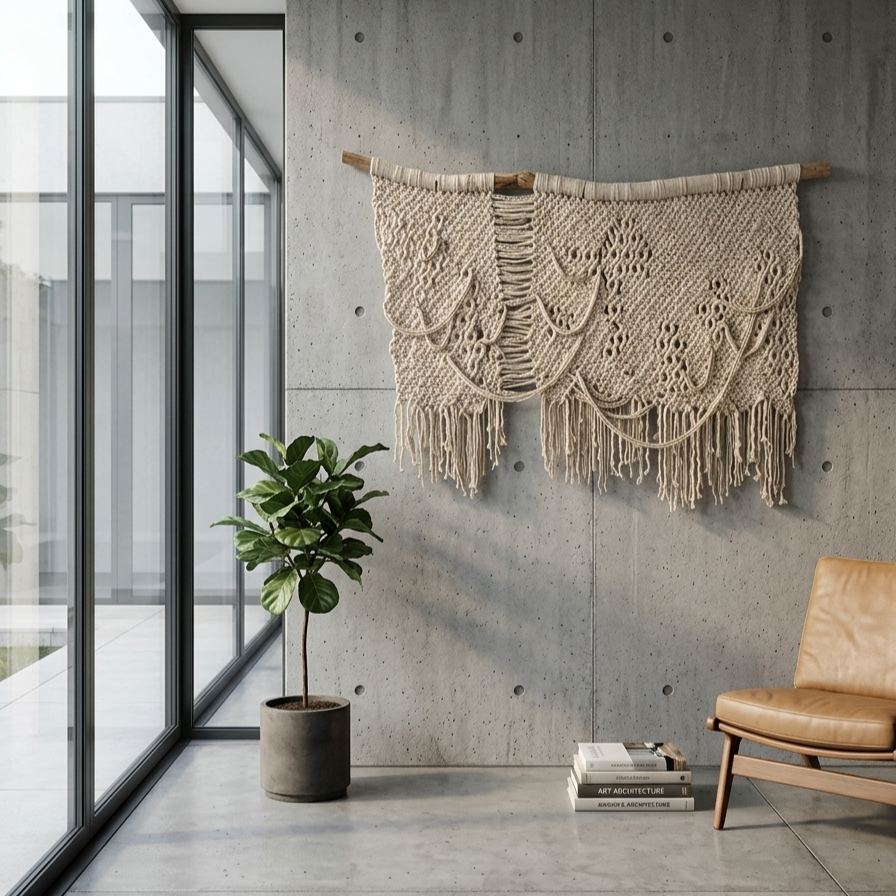
Fiber art acts as a functional solution to this architectural challenge. Whether it is a single expansive hanging or a rhythmic series of smaller framed works, the introduction of natural fibers serves to break up and absorb sound vibrations rather than reflecting them. By introducing these sculptural layers, we aren't just adding a focal point; we are softening the room’s acoustics and creating a tranquil, conversation-friendly atmosphere. It is art that improves how a space sounds as much as how it looks.
3. The Living Shadow
The beauty of a textured piece is that it is never the same twice. Because the fibers have physical depth, they interact constantly with the light.
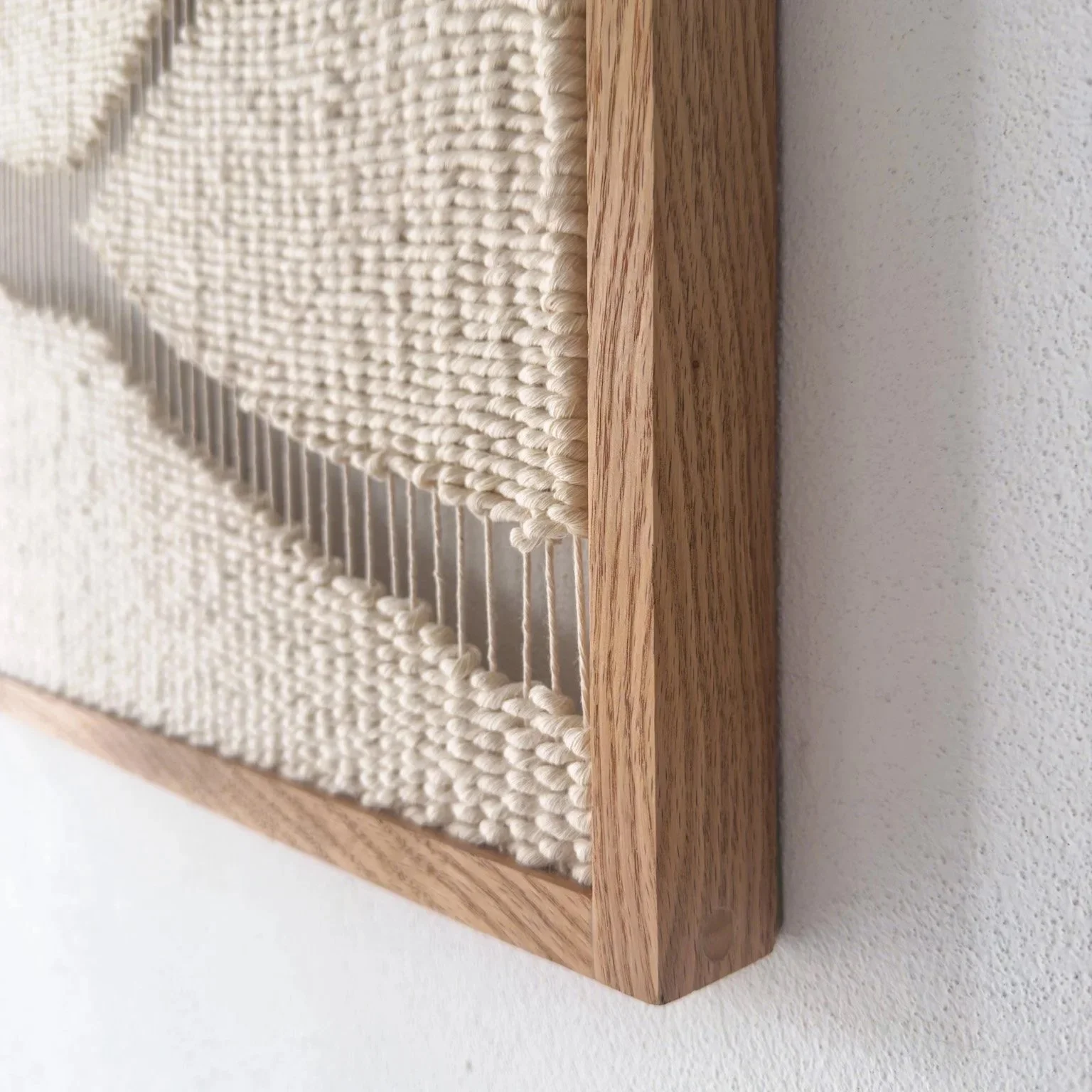
As the sun moves through the room, the piece "re-draws" itself. Soft morning light creates a gentle glow, while direct afternoon light produces sharp, geometric shadows that extend the artwork’s reach across the wall. The shadow becomes a second, ethereal layer of the art itself.
4. Texture as a Modern Neutral
In a curated home, "neutral" shouldn't mean "unnoticeable." Using a monochromatic palette of unbleached cotton allows the work to remain sophisticated and calm, while the visual weight of the texture provides the necessary "anchor" for a large wall. It allows a space to feel full and designed without the need for busy colors or patterns.
Whether you are an architectural purist or simply seeking to restore tranquil acoustics to a home with high, reflective ceilings, sculptural fiber art offers a rare synthesis of form and function. This is more than art; it is a critical final layer of an interior. By moving beyond the flat plane of a print and into the third dimension, we can create spaces that are tactile, quiet, and deeply curated.
Are you sourcing for a large-scale project that requires both acoustic softening and architectural scale? I specialize in creating bespoke, framed, and free-hanging fiber works that respond to specific spaces. Let’s discuss how we can collaborate on your next design.