
The Art of Longevity
A Guide to Caring for Large-Scale Textiles
When you bring a large-scale textile piece into your home — especially one involving natural cotton and solid hardwoods — you are bringing in a living texture. I am often asked how to maintain the crisp, architectural lines of my work over time.
The good news is that high-quality fiber art is remarkably resilient. Whether your piece is integrated into a frame or hanging freely, here is how to ensure it remains a focal point for years to come.
1. The Gentle Refresh
Natural cotton is a "breathable" material. To keep it looking fresh, I recommend a very simple routine once or twice a year:
Dusting: Every few months, a gentle "feather dusting" or a light shake is all it needs.
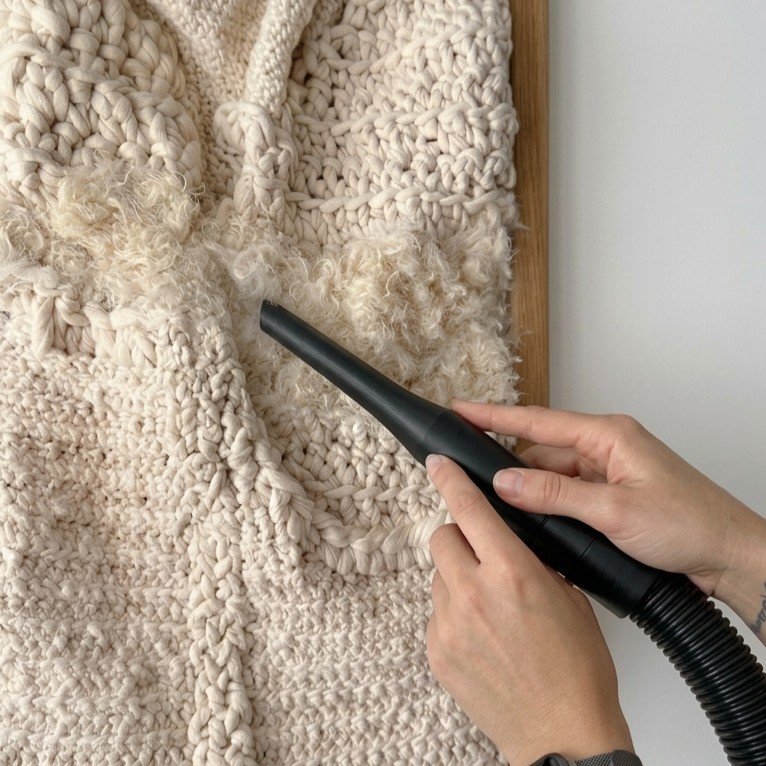
Gentle Hoovering: Use your vacuum on the lowest possible suction setting. Gently move the attachment near the piece to lift away any settled dust. Ideally, you want to get close enough to pull the dust away without actually touching or pulling the fibers.
2. Structure and Stability
People often worry about art "warping" or "sagging," but the way we build our pieces eliminates these concerns before the art even reaches your wall.
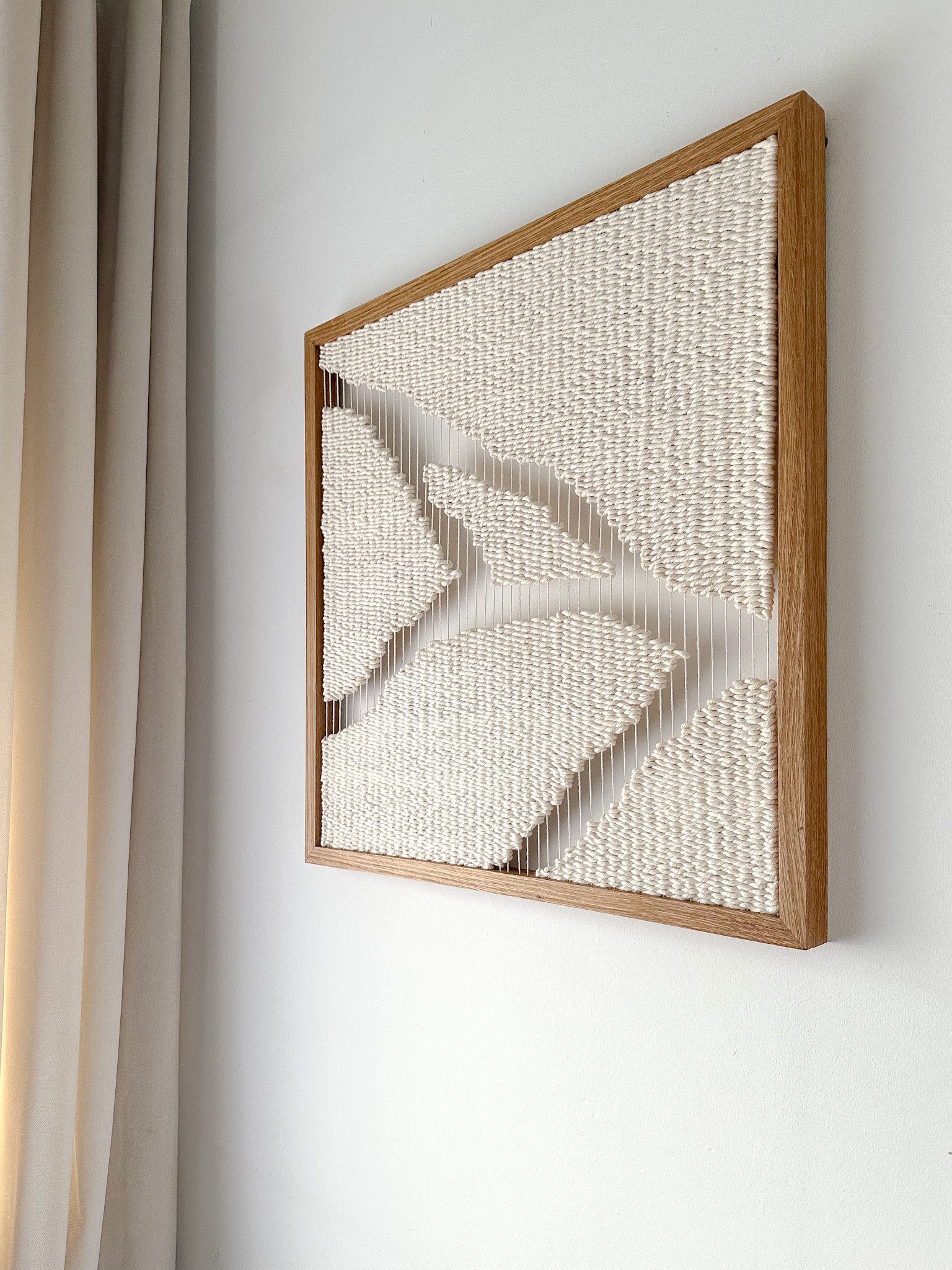
The Framed Collection: If you have one of our integrated frames, there is nothing you need to do. Prash uses traditional, metal-free woodworking techniques that allow the solid walnut or oak to breathe and adjust to the seasons. This prevents the wood from warping or twisting, keeping the tension of the textile perfect regardless of your environment.
Tapestries: For unframed work, gravity is your friend. If your piece has been shipped overseas, it may arrive with a slight "memory" of being rolled or folded. Once hung properly, the fibers will naturally relax and settle into their intended place over the first few weeks.
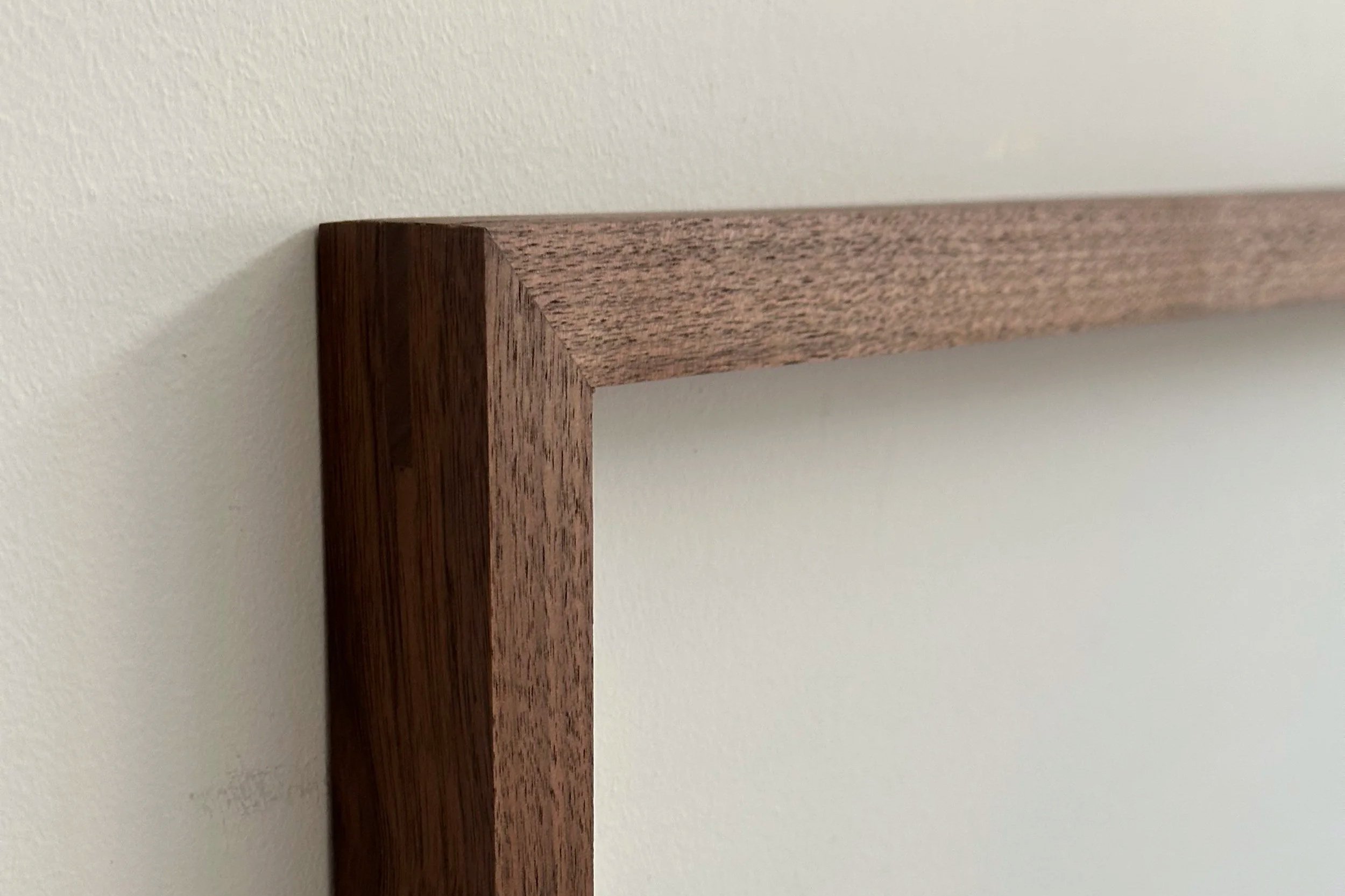
3. Sunlight and Environment
While the play of light is essential to seeing the shadows in my work, extreme, direct UV light over many years can naturally mellow the color of both wood and cotton.
Placement: Aim for bright, indirect light to maximize those dramatic shadows without exposing the fibers to harsh, constant midday sun.
Stability: Because of the joinery techniques Prash uses, our frames handle humidity and temperature shifts beautifully. However, like any fine object, they will be happiest in a stable home environment.
A Note on My Commitment to Your Piece
Every artwork that leaves my studio — whether it is a small study or a large-scale commission — comes with a physical care guide specifically tailored to the materials used in that piece. My goal is for you to feel completely confident in your investment.
Art is a living part of a home, and I am always here to ensure yours remains as beautiful as the day it arrived. If you ever have questions about placement, cleaning, or how your piece is settling into its new environment, my door is always open.
Have a question about a specific space or a piece you’re considering? Feel free to reach out here.