
the scale guide
how to choose the right dimensions for a statement wall
One of the most common questions I get isn't about color or texture — it’s about size. "Is this too big for my sofa?" or "Will this get lost on my high ceiling?" The truth is, even the most beautiful piece of art can lose its impact if the scale is off. In modern architecture, where we often deal with vast walls and open volumes, the art needs to do more than just hang there; it needs to command the room.
Here is how we think about scale in the studio, and how you can choose a piece that feels intentional, not accidental.
the 75% rule: art and furniture
If you are placing a work above a sofa, a sideboard, or a bed, a good rule of thumb is that the art should occupy roughly 60% to 75% of the width of the furniture below it.
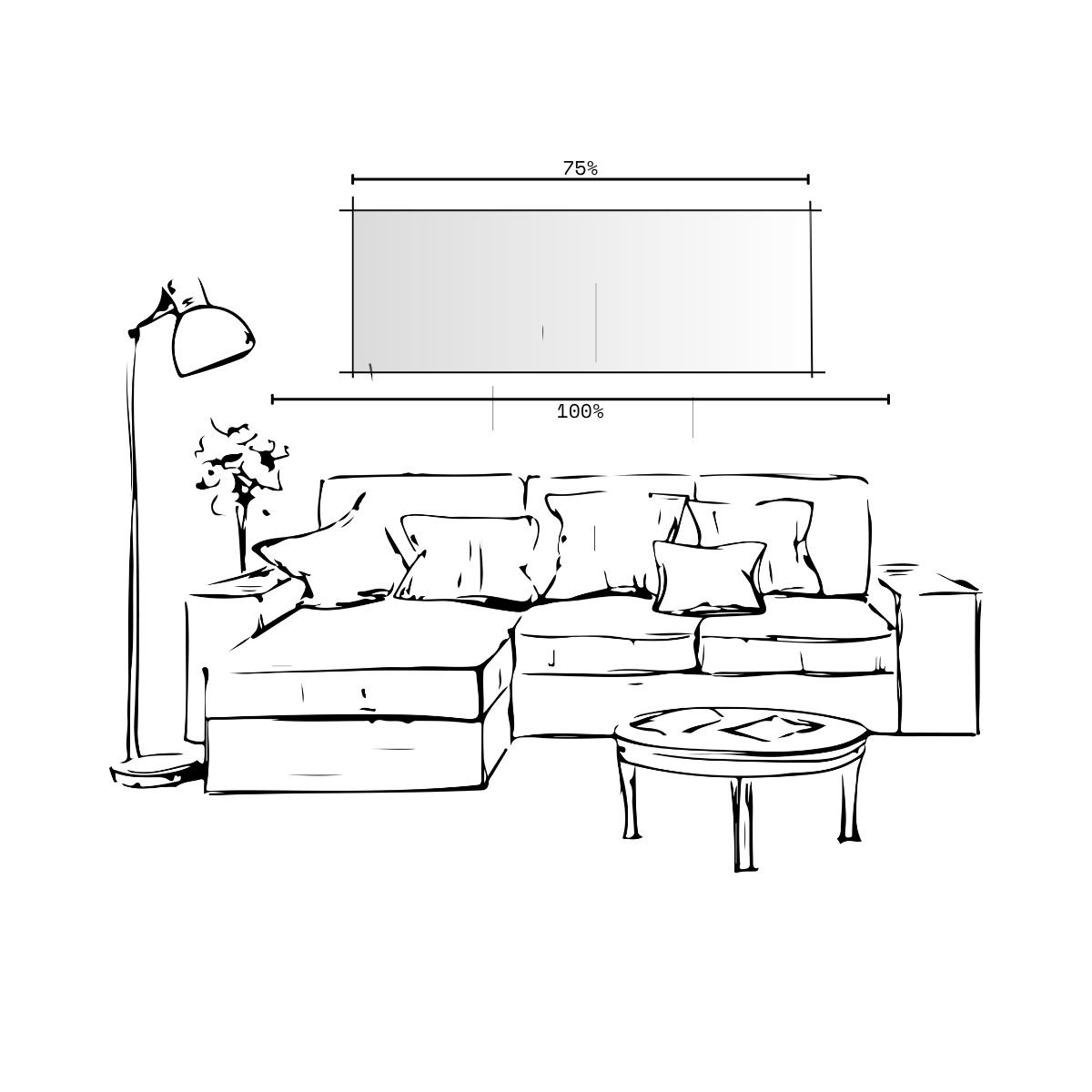
The Golden Ratio: Using simple geometry to calculate the ideal relationship between your art and furniture.
This is why choosing a single, large-scale hanging is so transformative for a living room. It provides the visual weight needed to anchor a heavy piece of furniture. When art is too small, the furniture looks "heavy" and the wall looks "empty." When the scale is right, the art and the furniture become one cohesive architectural element.
NOTE: While we often use the sofa as the primary example, these proportions apply to any 'anchor' piece—whether it’s a sideboard in your dining room or the headboard in your master suite.
the vertical challenge: high ceilings and voids
Modern homes often have incredible vertical volume, but that empty space can feel "cold." A standard-sized frame often vanishes in a room with high ceilings.
To solve this, we look at the horizon of the room. For spaces with extra height, we often recommend our taller vertical studies or a rhythmic series of 3 to 4 frames. By hanging a series vertically or in a tight horizontal row, we create a "sculptural block" that draws the eye upward, celebrating the height of your home rather than letting it feel hollow.
the power of the series: creating "implied" scale
Sometimes, one massive piece isn't the answer. A set of several frames allows us to create "implied scale."
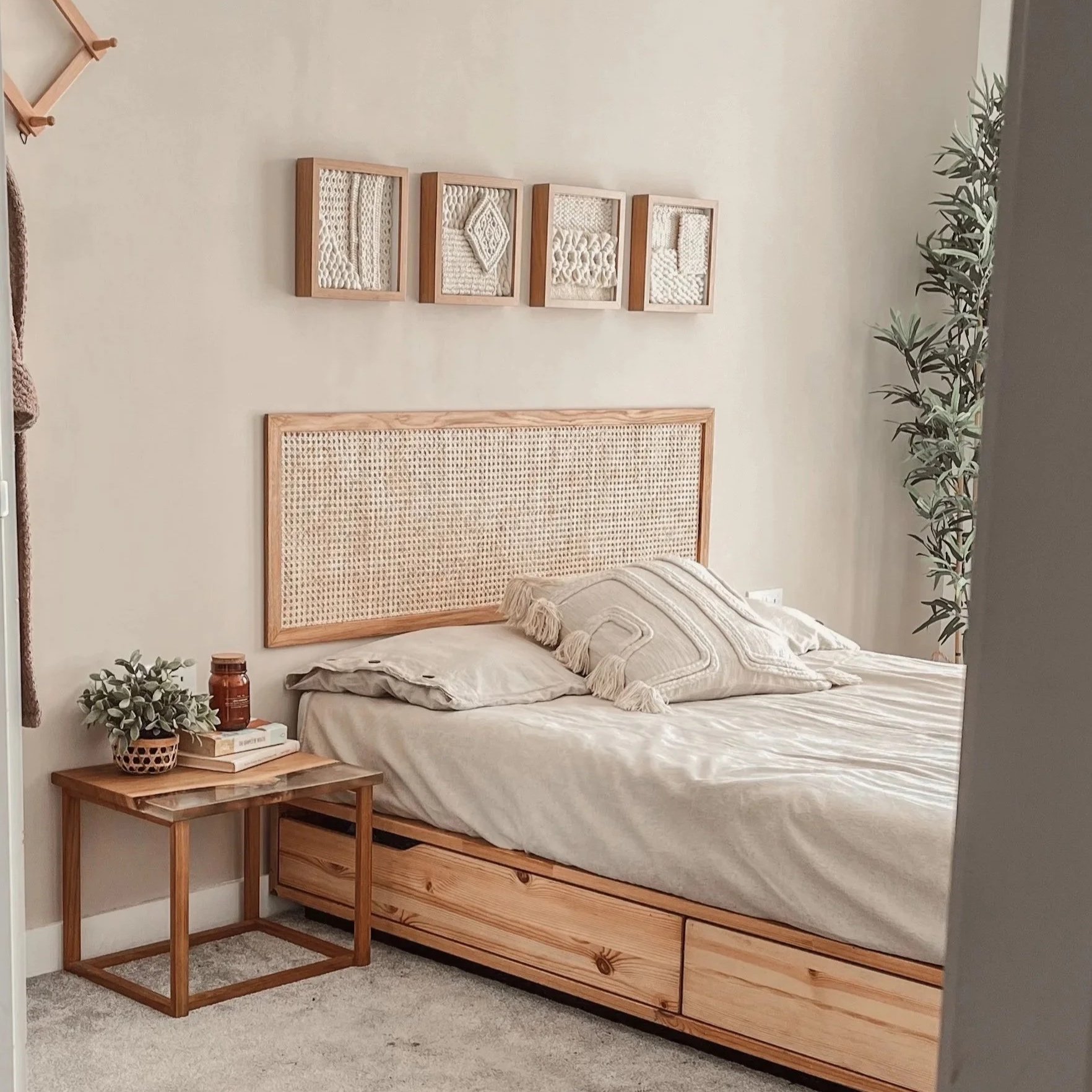
Using a rhythmic set of frames to build a singular, continuous architectural statement.
By spacing a series of frames a few centimeters apart, the eye reads them as one large, continuous installation. This is a sophisticated way to fill a long hallway or a dining room wall. It offers a sense of rhythm and movement that a single solid piece can’t achieve, while still providing the acoustic softening and tactile presence that a large-scale work offers.
negative space is your friend
Scale isn't just about how big the art is; it’s about the "breathing room" around it. A statement piece needs negative space to "exhale." We always suggest leaving enough room around the edges of the work so the wall itself becomes a frame.
If you’re unsure, a simple trick is to use painter's tape to mark out the dimensions on your wall. Live with those tape lines for a day. See how the "shape" feels as you walk through the room.

"Living with" the scale: The first step in our collaborative design process is often a simple strip of tape.
pro tip
Avoid "Postage Stamp Syndrome"
In the design world, we call it "Postage Stamp Syndrome" when a beautiful piece of art is simply too small for the space it’s in. It ends up looking like a tiny stamp on a giant envelope. If your art covers less than half the width of your furniture, it loses its "anchor." The goal isn't just to fill a gap; it’s to create a balanced architectural relationship between the art and the room.
still unsure about the math?
Choosing the right scale is part of the "initial dialogue" we have during every commission. When you send us photos of your space, we don't just look at the style — we look at the proportions of the room. We help you decide if your wall needs the singular impact of a large hanging or the rhythmic elegance of a framed series.
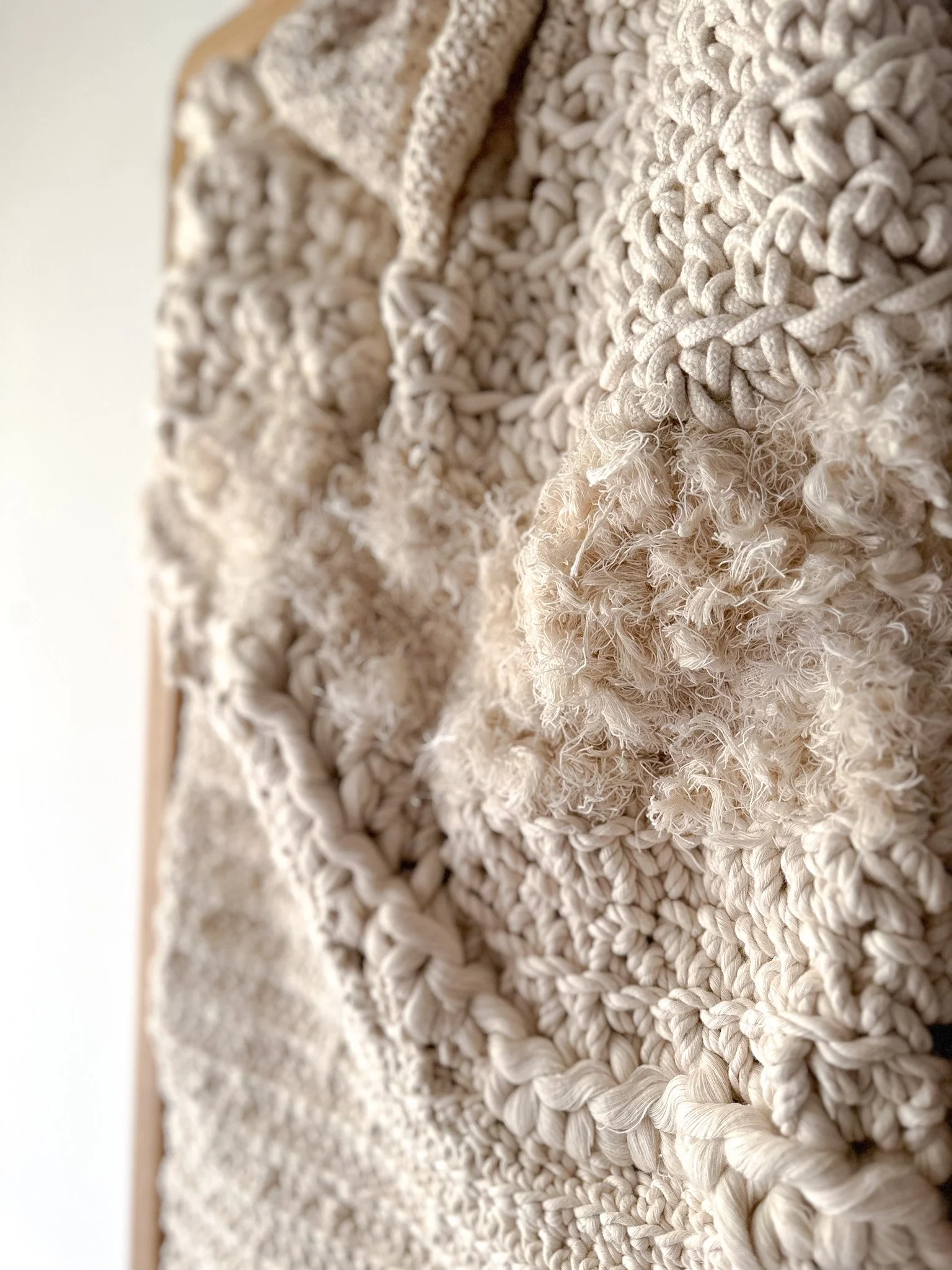
The tactile weight: ensuring the texture is as impactful as the scale
At the end of the day, it’s about making sure your art feels like it was built for the room, not just placed in it.
If you’re looking at a blank wall and wondering where to start, feel free to reach out. We’re always happy to look at your space together and help you define the perfect scale to anchor your home.