
The Story of the Kintsugi Diptych
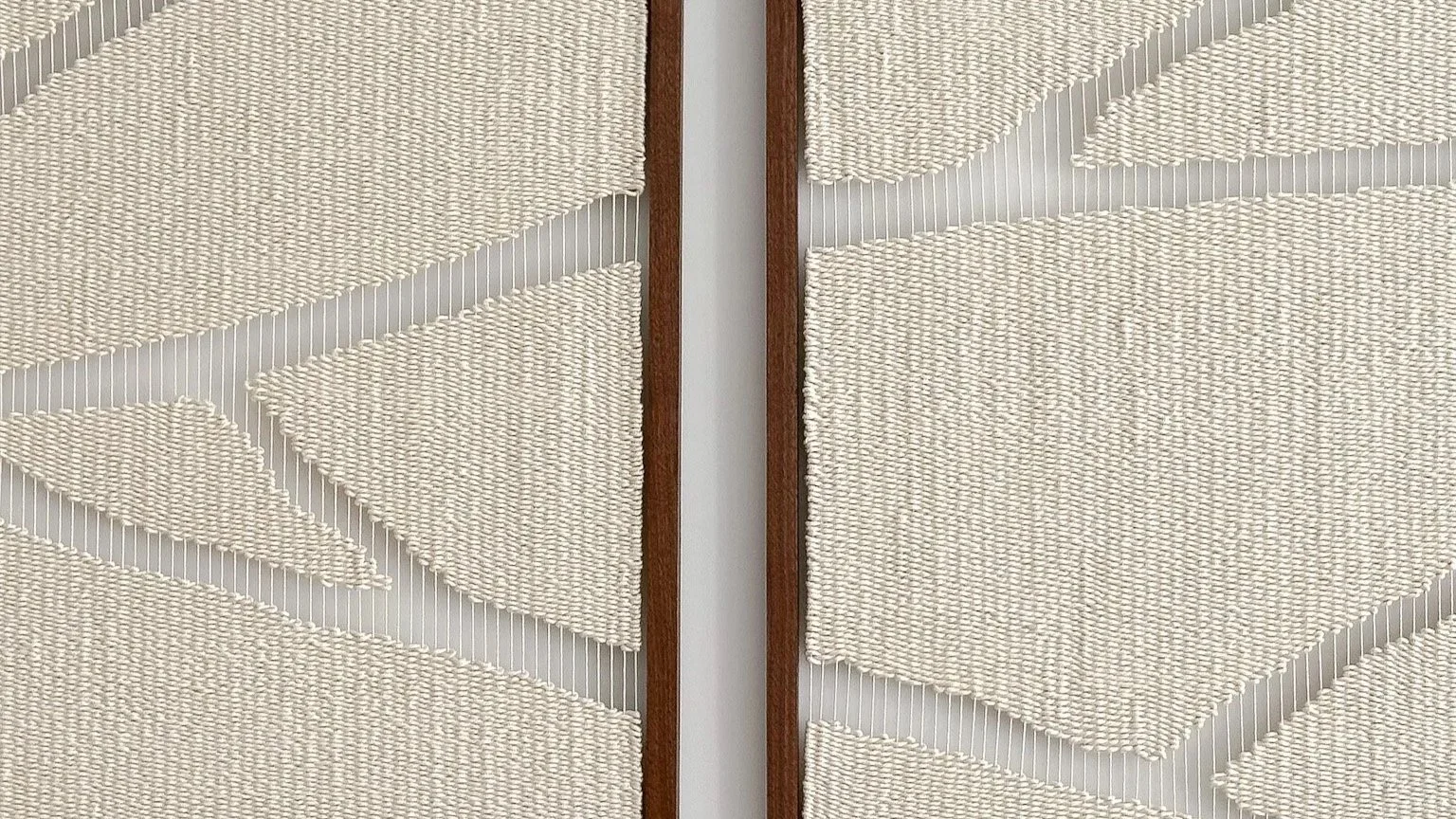
Since my last update about the structural shifts in the studio, I’ve been thinking about what it actually takes to bring a complex vision to life. A custom commission is more than just a large-scale version of an existing study; it’s a detailed dialogue about space, philosophy, and light.
I wanted to walk you behind the scenes of one of my favorite projects — a Kintsugi-inspired diptych commission. This project perfectly illustrates my process, from the first "why" to the final installation.
1. The Consultation: Finding the Thread
Every commission begins with a conversation, but this one felt particularly resonant from the start. My Kintsugi Series was born from a very personal "quiet ache" — the isolation of early motherhood and the disorientation of returning home to Portugal only to feel like a stranger in my own country. For me, textile art became an anchor; a way to process the silence of grief and the moments when we feel most undone.
The client was drawn to this exact philosophy. Having navigated her own "hard times," she didn't just see a diptych; she saw a reflection of resilience.
"In these pieces, the cotton cord is woven tight while intentional empty spaces are left open, representing the gaps left by grief. These 'scars' are not hidden; instead, they are integrated into the structure of the work."
Our consultation focused on how to translate that shared meaning into her specific home. She had a fairly large wall space that needed a significant presence. I sketched out three different size variations to help us visualize the scale. Interestingly, as we talked through the weight of the story and the needs of the room, she decided to go slightly larger than she had initially planned. We ultimately settled on walnut frames to provide a rich, grounded warmth that felt right for the space.
2. The Mapping of the Void: From Sketch to Structure
Unlike traditional Kintsugi, I don't use gold to highlight the fractures. Instead, I use empty space. By leaving the weaving open, the "scars" become windows — you can see right through the work to the wall behind it. This choice makes the piece feel both solid and incredibly fragile at the same time.
Because this was a diptych, the most critical challenge was ensuring the "crack" flowed naturally across the two panels. I created several iterations for the client, mapping out different paths until we found the one that felt like the right balance of tension and release.
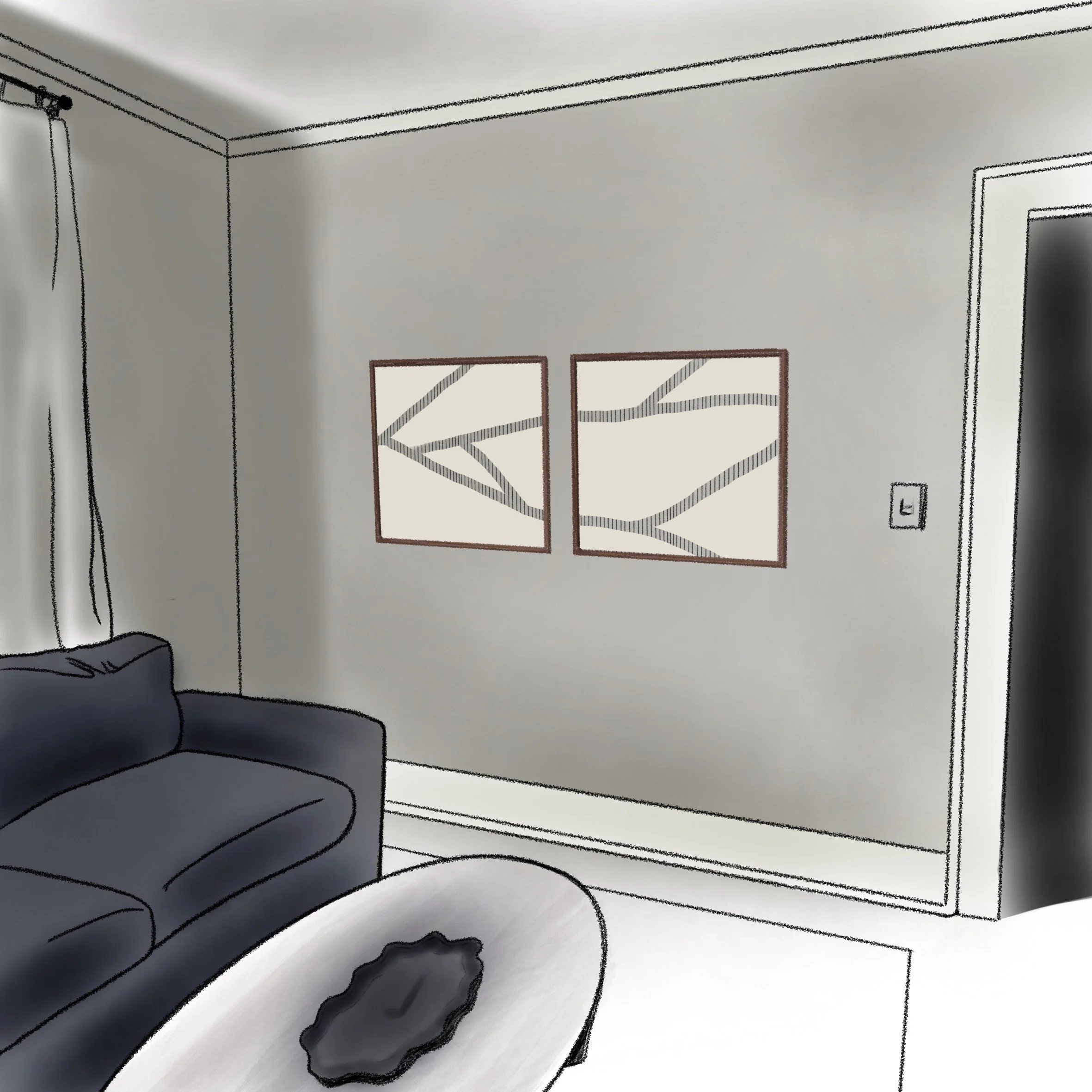
Once the design was finalized, the technical work began. Prash crafted the integrated weaving frames for me, this time using solid walnut to match the client's space. These frames are more than just a border; they are the loom itself.
To translate my sketches into the physical weave, I use a grid system attached to my rack. This allows me to map out the exact coordinates of where the cotton cord should be and where it should give way to empty space. It’s a slow, rhythmic process. Referring back to the grid keeps the design precise, but the hand-weaving ensures that the organic "ache" of the series remains intact.

3. The Dialogue: Progress in the Making
One of the most important parts of my commission process happens while the work is still on the rack. I don’t believe in "the big reveal" being a surprise; instead, I invite the client into the studio virtually.
As the weaving grows, I send regular progress photos. This transparency allows the client to see the scale and the way the light begins to interact with those intentional voids. It’s a chance for a final "pulse check" — if we need to make a minor tweak to a tension point or the flow of a line, we do it together.
My ultimate goal is for my clients to have a piece they will love forever. By making them part of the journey, the final artwork doesn't just hang on their wall; it carries the memory of its creation.
4. The Final Reveal: Finding the Light
There is a specific kind of magic that happens when a piece leaves the studio and finds its permanent home.
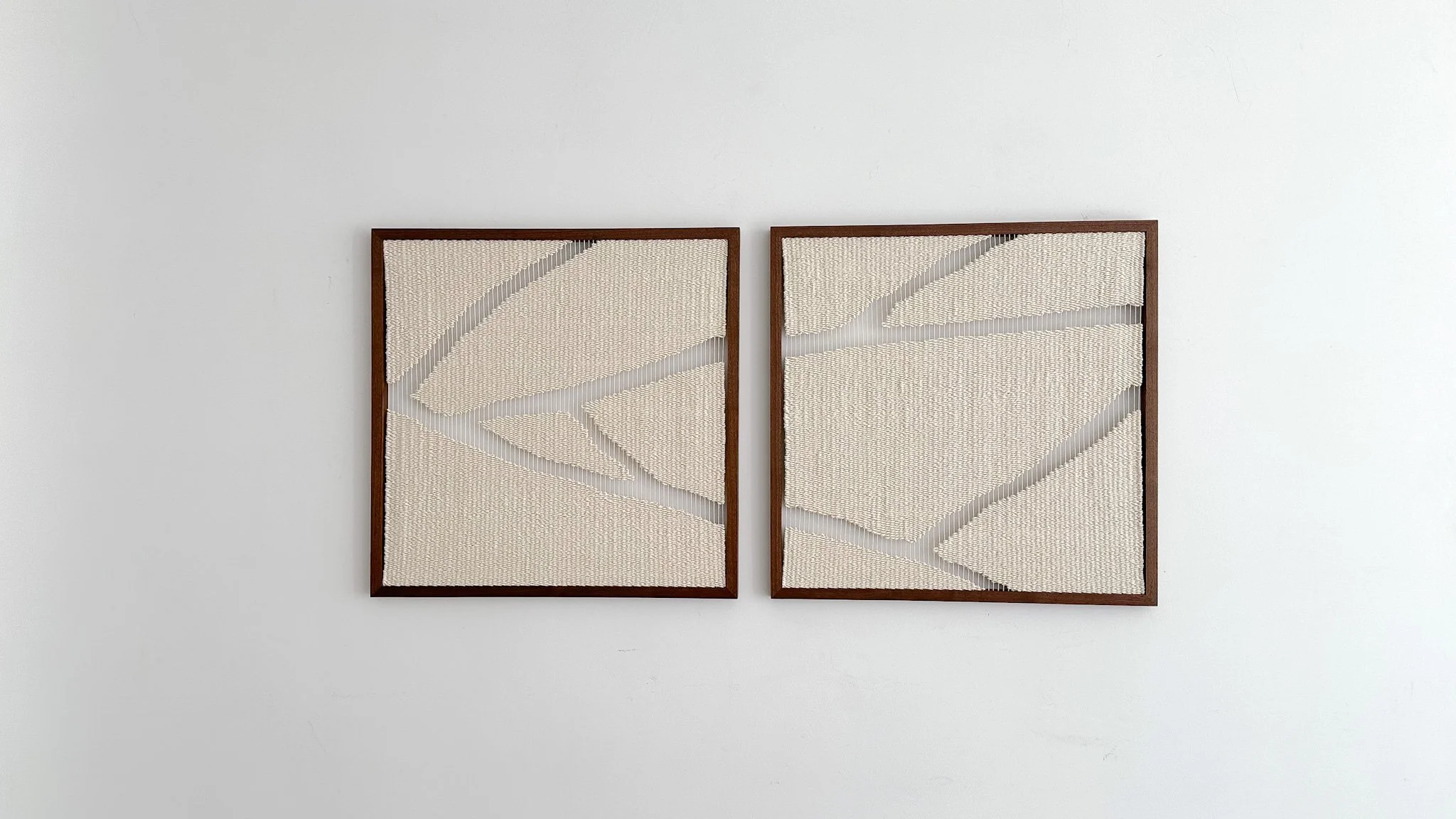
In my workspace, the Kintsugi Diptych hung against clean, white walls—the ultimate blank canvas. In that environment, it was a study in pure form; the contrast of the rich walnut frames against the pale cotton was stark and focused. It was the piece in its "raw" state, existing purely as an object of design.
But the true transformation happens during installation. Seeing the pieces in the client’s home was the final "repair" in this Kintsugi story. On their wall, the diptych finally found its rhythm. The intentional "scars" and empty spaces I mapped out now catch the specific, shifting light of a living space, and the walnut frames ground the work perfectly against the warmth of their interior.
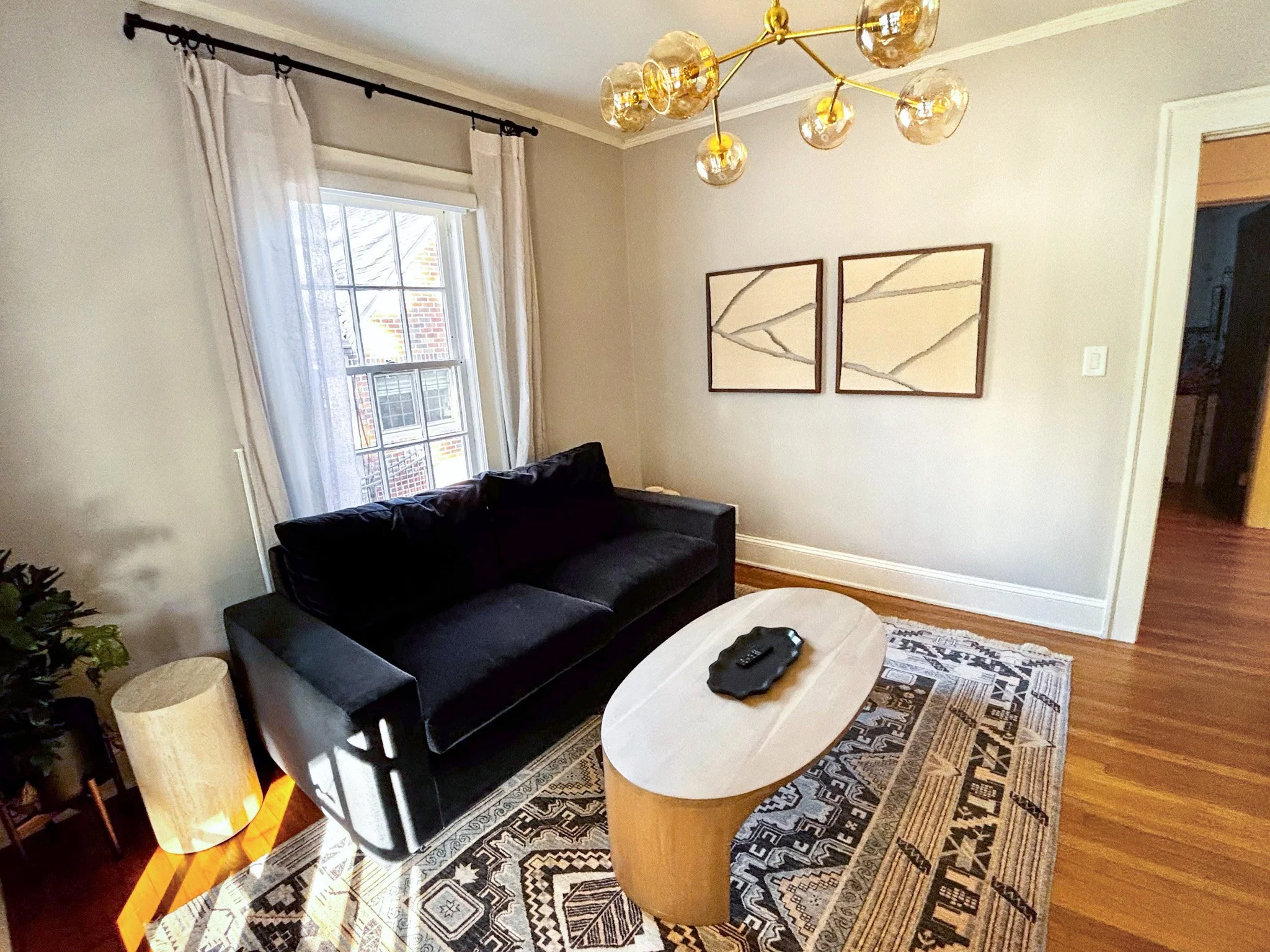
It is incredibly rewarding to see a piece born from personal solitude and the "white walls" of my process find a place in someone else’s life, representing their own resilience and beauty.
It was a privilege to bring this diptych to life and to see it find its true purpose in a home where its story could breathe. Seeing the way the light now moves through those intentional empty spaces is a constant reminder that there is a deep, quiet beauty to be found in the moments when we feel most undone.
I enjoy taking on a limited number of custom commissions throughout the year, focusing on pieces that resonate with this philosophy of resilience and structural depth. If you have a wall that needs a statement — or a space that needs a specific story — I would love to explore what we can create together.
You can learn more about my commission process and check my current availability here.